Tag Archives: Multiverser

#47: Character Routines

This is mark Joseph “young” blog entry #47, on the subject of Character Routines.

This is about the creation of my book Verse Three, Chapter One:  The First Multiverser Novel, now being posted to the web site in serialized form.  This “behind the writings” look definitely contains spoilers, so you might want to read the referenced chapters before reading this look at them.  That link will take you to the table of contents for the book; links below (the section headings) will take you to the specific individual chapters, and there are (or will soon be) links on those pages to bring you back hopefully to the same point here.  There were also numerous similar previous mark Joseph “young” web log posts:

  1. #18:  A Novel Comic Milestone (which provided this kind of insight into the first six chapters),
  2. #20:  Becoming Novel (covering chapters seven through twelve),
  3. #22:  Getting Into Characters (for chapters thirteen through eighteen),
  4. #25:  Novel Changes (chapters 19 through 24),
  5. #27:  Novel Continuation (chapters 25 through 30),
  6. #30:  Novel Directions (chapters 31 through 36),
  7. #33:  Novel Struggles (chapters 37 through 42),
  8. #35:  Quiet on the Novel Front (chapters 43 through 48), and
  9. #37:  Character Diversity (chapters 49 through 56),
  10. #39:  Character Futures (chapters 57 through 60), and
  11. #43:  Novel Worlds (chapters 61 through 66).

This picks up from there.  Our characters are settling into new plans.

img0047Earth

There is some essential background to the book as a whole in that first post, which I will not repeat here.


Chapter 67, Slade 22

People who quit addictions remain addicted.  My father quit smoking in essence by saying that he did not need to have a cigarette right now whenever he wanted one, and managed not to have one for half a century.  Bob Slade had quit smoking before he was a verser, which is why he always had those matches, later toothpicks, in his mouth, but the tense situation of finding himself trapped and hunted on someone’s starship made him nervous enough that he wished he had one.

Slade realizes that he’s having something of an alien encounter, but the crew looks human, so he’s dealing with that in his own offbeat way by discussing little green men.

The spell is gibberish.  I needed him to cast a “darkness” spell, and the particular concepts of magic he was learning from Omigger involved incantations in lost languages combined with specific movements (and sometimes materials) to tap supernatural energies.  Darkness is a relatively easy spell, in Multiverser terms, as far as what works in different worlds, and it’s defensive without being aggressive.

Although this is a Blake’s 7 inspired world, my captain is more like Kirk than Blake (although I think he’s more like a choral conductor I had in New Jersey All-State in 1971), and my computer/science guy has more Spock than Avon in him.  Slade’s claim that he called some darkness makes no sense scientifically, but as I wrote decades ago, in magic cold and darkness are energies opposed to heat and light, not mere absence of energy.

My predictions concerning the demise of TV and console games seem to be on track a bit faster than I anticipated, but it certainly made sense to assume that they would be unknown this far in the future.  I had seen PBS specials covering wearable computers, and was expecting them to move into use more quickly than they have, but they do seem to be coming via the smartphone and possibly Google Glass®.

The name game is something that happens with versers, because no one knows who you are until you tell them.  I’ve often had players invent names to identify themselves, or use the names of fictional characters.  Bob at this point just gives them the names people have used for him in the past, and the reference to his girlfriend is a throwaway—I never detailed the girlfriend.


Chapter 68, Hastings 24

In game, I was working with Chris Jones’ character Shadow, who had the ability to become invisible, was incredibly strong and very hard to hurt, and could fly.  He grabbed the ghoul and flew with him, and let me pretend I was doing it somehow.  We got the guns after we reached the airport.  Most of the rest of it was very similar to the game, although I think the game character chose Atlanta.  I liked the idea that Arnie’s now long dead parents retired to Miami so he could visit their graves there.

I was not sure what should happen to the bullet that hit the wall.  It could have deflected, but that would have created a serious danger that it would hit Arnie, and I didn’t want that.  I thought it made sense for a telekinetic force wall, as opposed to a psionically generated force shield, to hold things that hit it, and prevented the dangerous bouncing.

I know that cursing is common in modern books, but it’s not part of my speech patterns and I saw no reason for including it in the books.  It was simple enough to say that Arnie cursed.  I have often wondered how I would cover this if it ever went to film or video, because of course he would have to say something.

The guns will become part of Lauren’s gear.  They are just like a set my character has.  John Cross has since raised issues with whether the design is possible, but has concluded that it could be, given certain assumptions that are not contrary to the book.

I liked the gag about dropping him at the airport where people land safely all the time, instead of just dropping him from wherever they were over Philadelphia.  She doesn’t actually say that she could smash him into the ground below or put him down gently, but she conveys it in the metaphor of landing at the airport.


Chapter 69, Kondor 23

That iridescent indigo sky is among my favorite colors, and I included it largely because of that.

Kondor’s wariness probably reflects the way I run game characters when I’m playing the party leader:  always cautious, moving slowly and keeping eyes open at all times.  I don’t like to lose party members, and I don’t often lose them.

I notice two points now, in retrospect.  One is that I never mention horses in the telling in the book.  Often in play characters will ask for horses to make the trek more quickly.  The other is that when I created the world I made the distance twelve miles, which no one can walk in an hour.  The “less than an hour” is not from the castle, but from the sunrise at the second crossroad.

I like the phrase, “monumental reminder of his own mortality” as a description of a graveyard.  I should shorten it, removing the possessive, and put it on a Facebook image card or something.

People are often uncomfortable among dead bodies, and for many that extends to cemeteries.  I thought it was a good counterpoint for Kondor’s atheism and general skepticism of all things supernatural that he could not account for his own discomfort with tombs, and that his explanation that it was a reminder of his mortality was both a plausible excuse and an answer that had been invalidated by his experience.  It also sets up his own internal inconsistency, that he does not want to admit he is afraid of something in a graveyard but he is compelled to express the fear through his actions.

Standard marching band steps are usually a short eight steps to five yards or a long six steps to five yards.  Both of those are slightly unnatural practiced steps.  A standard pace—a double stride—is about five feet, varying from one person to another.  Ten yards is thirty feet, six paces or twelve strides, so his steps are a bit short.  He is struggling to do this.

People think that football fields are a hundred yards long; they are actually a hundred twenty yards long, due to the end zones of ten yards each.  Kondor makes, and then corrects, that mistake, although he is estimating, and he is trying to encourage himself.

I wanted my characters to be credible adults who did not swear.  It was easy with Lauren, and with Slade his oaths are all references to Pagan deities.  With Kondor, the solution was that he was raised to avoid such words, and had his mouth washed out with soap more than once for using them, so he tended to avoid saying them.

When I originally designed the vorgo, I described it as exactly the size and shape of a bowling ball, roughly the same weight.  Someone suggested that it ought to be bright green, which would add to the comedy for the player character who made a trek to retrieve what proves to be a bright green bowling ball.  When I got to this point in the story, though, I ignored the color suggestion—I was trying to maintain a dark mood and did not want the levity.  It is still humorous enough that he identifies it as a bowling ball and sees nothing of value to it.

The “gravest” importance was a deliberate word choice.

The shock value of the bodies rising to seated positions works in the game; I hope it works in the book.  I put the break here, again returning to the notion that I wanted readers to want to know what happens next and so keep reading.


Chapter 70, Slade 23

I have a very clear image of Ann Parker in my brain, but have no idea where I got it.  She’s got long blonde hair, and is petit.  The implant is there because of the character Gan on Blake’s 7, who had an implanted violence limiter, and there was an episode in which there was a defect with it which forced them to find medical help; I did not know what adventures we were likely to have at this point, so I wanted options.  Her implant is my own idea, although it owes something to some book I read where pilots interfaced directly with their ships by a plug.

Kozakowski was the name of the smartest kid in my high school class (or at least, that’s what everyone thought), but I just used it for a name.  The character is somewhat modeled on Tarrant, pilot who joined the Blake’s 7 crew in a later season, but I made him black to push myself away from the feeling that I was copying the show too closely.

Tom Titus is again very much Vila Reston.  I always loved Vila’s line, “There isn’t a door I can’t get through if I’m scared enough.”

Bert “Burly” Bently is more of a copy of Gan, a big gentle guy, but I made him the engineer.

Ishara Takamura is another whose image is very clear in my mind but whose origin I cannot identify.  He has typical features for a slender Japanese male, with a bit of a sinister look to him.

I always picture Toni Bently as tall, thin, and black, a sweet smile and gentle disposition, and an air of culture.

George White is a composite of a number of people I’ve met over the years none of whose names I recall, a guy who can do all different kinds of things because he’s done all different kinds of things; he’s older than most on the crew, probably in his late fifties or early sixties.  A “Jack of All Trades” skill set was used in the game Traveler, which I never played but for which I created characters once, and I liked the idea.

When I put Marilyn Wells on the crew, I had in mind a character something like Troi on Star Trek:  The Next Generation, but a slightly different look with lighter hair.

The notion of finding a ship adrift was a bit of an improbability, but I needed an explanation for how they had a ship, and to avoid being too much like Blake’s 7.  This barely qualified, but I couldn’t think of another option.

Torbin is based on the computer of the original show, including the idea that it won’t talk about what happened previously or where it originated.

When I run this world in games, I often give this chapter to the player to read when he finds a way to get historic background on the world.  I pretty much invented the Federation backstory, looking for a credible way that a totalitarian regime could arise in something as vast as interstellar space.

The progression from ‘chairman of the meetings hosted at my home’ to ‘chairman the most powerful ruler in known history’ is modeled after one theory of how the Bishop of Rome became the Pope.

As Slade defines himself as landing on the rebel side of a civil war, it is the first step in his view of who they are and what they do.  It takes another step in a later chapter.


Chapter 71, Hastings 25

My recollection is that Lauren forgot her workout in part because I forgot it.  I considered going back and trying to work it into the earlier chapters, but decided that there was enough happening in her life that it was perfectly logical that she would forget an appointment.

The thing about throwing off your sleep cycle with a nap is a rather personal experience of my own—I often find that a nap at the wrong time means I’m awake too late and can’t get up the next day.

John “A1Nut” Cross gave me a lot of trouble about those bullets after the book was published.  I might have handled it differently had he given me feedback on the draft (he helped me immensely with the rifle/pistol arrangement for the world Dark Honor Empire I created for Multiverser:  The Third Book of Worlds), but I was working pretty much from what Ed did in-game.  The issue is whether you can have a pistol that fires the same bullets as a fifty-caliber machine gun; fifty caliber revolvers (they are made) use a shorter bullet with less kick.  However, in the end he agreed that one could custom-make such a gun, and the fact that it would have a lot of kick was covered in the description.

I used the trick with the coin to destroy the Coffee Shoppe.  By this point I had decided that Lauren was not going to survive the attack on The Pit, and the coin would become both a meaningless scrap and a problem for future worlds if I didn’t use it—besides, I thought it a clever idea and wanted to use it.  In game, I used an epoxy, because PC7 was the best glue I knew when I was still keeping track of such things (I read about Superglue and have some grasp of how it works, but don’t ever use it for anything), and Ed had me use something called PC12 when I looked.  But here I thought that the more modern superglue type adhesive was the better choice.

I had worked out what the three objects did for which the clues were given, and was working out how she would test them as I did it.  With the die, though, I thought I could get a good cliffhanger from having her black out—particularly as both Slade and Kondor had already died and gone to other worlds, so I figured the reader was expecting it to happen to Lauren, and I wanted to use that expectation.


Chapter 72, Kondor 24

Part of the fun of this chapter lies in the tension between Kondor’s certainty that there is no such thing as undead monsters and his recognition that something which looks entirely like that is now pursuing him.  He tries to invent explanations for what he sees, but he is still terrified and running for his life.

It was part of the conceit of the world that the undead could, at need, walk about within their cemetery but could only cross into the world in darkness.  The notion of the importance of darkness gave me some other problems, but the solutions were at least workable.


Interest in these “behind the writings” continues, so I’m still thinking they’re worth producing.  Feedback is always welcome, of course.  Your Patreon support is also needed to maintain this.

[contact-form subject='[mark Joseph %26quot;young%26quot;’][contact-field label=’Name’ type=’name’ required=’1’/][contact-field label=’Email’ type=’email’ required=’1’/][contact-field label=’Website’ type=’url’/][contact-field label=’Comment: Note that this form will contact the author by e-mail; to post comments to the article, see below.’ type=’textarea’ required=’1’/][/contact-form]
#43: Novel Worlds

This is mark Joseph “young” blog entry #43, on the subject of Novel Worlds.

This is about the creation of my book Verse Three, Chapter One:  The First Multiverser Novel, now being posted to the web site in serialized form.  This “behind the writings” look definitely contains spoilers, so you might want to read the referenced chapters before reading this look at them.  That link will take you to the table of contents for the book; links below (the section headings) will take you to the specific individual chapters, and there are (or will soon be) links on those pages to bring you back hopefully to the same point here.  There were also numerous similar previous mark Joseph “young” web log posts:

  1. #18:  A Novel Comic Milestone (which provided this kind of insight into the first six chapters),
  2. #20:  Becoming Novel (covering chapters seven through twelve),
  3. #22:  Getting Into Characters (for chapters thirteen through eighteen),
  4. #25:  Novel Changes (chapters 19 through 24),
  5. #27:  Novel Continuation (chapters 25 through 30),
  6. #30:  Novel Directions (chapters 31 through 36),
  7. #33:  Novel Struggles (chapters 37 through 42),
  8. #35:  Quiet on the Novel Front (chapters 43 through 48), and
  9. #37:  Character Diversity (chapters 49 through 56), and
  10. #39:  Character Futures (chapters 57 through 60).

This picks up from there.  Two of our three characters find themselves starting in new worlds in these chapters.

img0043Castle

There is some essential background to the book as a whole in that first post, which I will not repeat here.


Chapter 61, Slade 20

I was building Shella into a sorceress for no real reason other than that it gave me story and character development for Slade.  It turned out for the better in the long run, but at this point I did not see where it was going.  I recently read the quote (and I confess to being terrible at sources) that writing a novel is like driving home at night in the fog:  you can only see a hundred feet ahead, but you can make it all the way home.  That makes sense to me.

The “not bad, for an auto mechanic” line was important.  It was enough that Slade regarded himself a fighter, and was becoming one; I did not see him embracing a career in magic, and doing so would have made him too much like Lauren.  I needed him to think of magic as something he didn’t really do well and wouldn’t pursue seriously.

Having Shella there also gave me a side door through which to arrange Torrence’s marriage.  I wanted it to be something with which the modern Slade would be comfortable, but knew it had to fit within the concept of arrangements of the time.  Using the sister to introduce girls to her brother seemed the way to do it.

I found my way to get Slade out, and had tied up most of the loose ends to this point.  I did not know that any of these people would ever come back into the story, so the parting from Shella was a bit melancholy for me.

At the time I gave very little thought to what it was Slade was trying to do, that is, what spell he was trying to learn.  I don’t think I’ve returned to that, but it’s possible that I mentioned it again somewhere and have since forgotten.  Anyway, I’ll probably recall it in some future book.

I think the fact that Joe and Bob versed out in successive chapters was strictly coincidence here—I’d brought them both to the point that they were ready to go, and I had worked out where they were going, and found ways to move them, so it happened.


Chapter 62, Hastings 22

I wanted Lauren to learn the sort of “hyperspace” travel the werewolves used, as I was certain it would be useful to her in the future.  I had no idea just how much she would use it eventually, but here and now she needed to learn it.

In copying this chapter, I noticed that I’d missed a close quotation in the book.  It’s fixed in the online version.

I’m fond of grilled ham and cheese, and of cream of mushroom soup.  Tomato soup goes well with grilled cheese, too, but is a bit cliché, so I went with my preference.

I had eaten at Bookbinder’s in Philadelphia exactly once—treat of the executives of a company for which I had worked security, when I had to testify at a National Labor Relations Board hearing concerning the termination of an employee I had caught stealing from the company.  All I remembered, really, was that they had really good lobster bisque.  It’s also the only fancy restaurant in the city I know, but at least I knew it was there.


Chapter 63, Kondor 21

I created The Quest for the Vorgo as a world for a stripped demo game that ran very rough, but I found the world to be fascinating and reworked it for full game play; it was slated for release in The Third Book of Worlds, which is a work in progress.  It owes a lot to the wonderfully comedic Army of Darkness, and its idea of dropping a modern person into a medieval undead horror story.  I’ve used it for a lot of demos since I wrote this.

I was particularly interested in running Joe Kondor in it, because he was an atheist, and he would have to find naturalist explanations for the magic that permeates so much of this world.  I figured it would be fun, and there would be a sort of message in the very fact that in the face of all this magic he could maintain his persistent unbelief.

The opening of the world was also fun, because we have a group of magic-using locals who have just performed a ceremony which is supposed to call a “supernatural” deliverer to aid them, and the character appears in their midst.  I will never say whether he appears there because the spell worked, or they think the spell worked because he appears there, but generally people who land in this world take the bait and go on the quest whether or not they think the magic worked.

The names of these characters were invented quite off the cuff; the only one that has any real source is Dimtri, which I got by shortening Dimitrios, cover artist Jim Denaxas’ given name.  When I pulled the world together for game play, I did not carry the names into it, because they are not all that easy to remember.

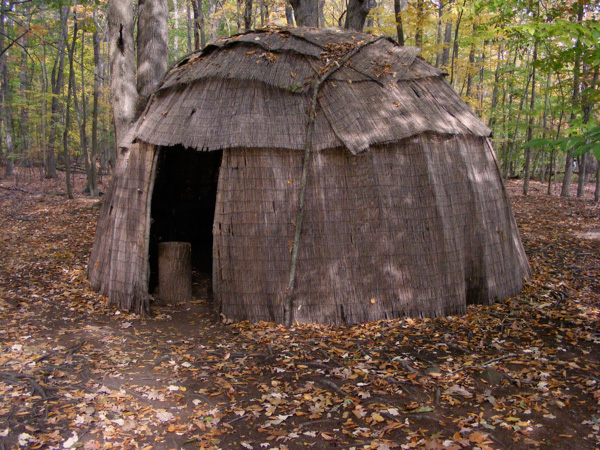
The castle is on a motte and bailey design, but Kondor would not know that (and the reader probably would not connect the description to anything specific even if told that it is the design of the Tower of London) so I simply had him describe it.  The photo selected for this web log entry is a motte and bailey castle, but rather a smaller and more simple one than the one in the story.

The name mistake, Jo-suede Candor, was at the time intended as a way of intensifying the sense that these people did not think of him as human.  They did not understand the structure of his name.

The comment on the bed was on the thought that medieval life was not comfortable, that they had nothing like the comforts we take for granted.  Even when Joe was in Sherwood sleeping on a mattress he made from local materials, his bed was more comfortable than this one in the main tower.


Chapter 64, Slade 21

In-game, players roll each time they enter a new universe to see whether they have moved to the next “stage”.  In the first stage they enter unconscious and awaken.  In the second stage, though, they arrive in a dream state, and the referee mixes bits of reality with bits of the past and whatever fantastic elements he wishes, much as the sort of dream you have when you are awakening but still dreaming and things in the room mix with the dream.  I wanted this to happen in the book, and Slade’s second world gave me an opportunity to experiment with it.

I created this world specifically for the book, although I later distilled the essential elements from it for demo games and was hoping to release it in a planned project of short world books called “Triple Play”, sets of three worlds that were of similar substance, this one one of three space settings.  That has not materialized.  I based a lot of this on the concepts of Blake’s 7; as I previously mentioned that my thief Filp was based significantly on Vila Reston, I also based characters here somewhat loosely on those characters.  I had run a Blake’s 7 world at least twice in playtest (after all, Ed always encouraged plagiarization for game play) but knew I couldn’t use it as it was, particularly as I think someone had been working on a role playing game for it about that time.

Kondor was surprised to find himself on a spaceship; Slade is similarly surprised, but his situation is different.


Chapter 65, Hastings 23

I gave the impression through Bethany’s dialogue that she and Lauren had fought vampires together before.  I already knew that Lauren was going to train Bethany when she returned in the past, but had not worked out any of the details of that.  When I got to that part in the second novel, it was something of a challenge to figure out how to make that happen.

The use of her psionic powers is becoming automatic for Lauren, which is going to matter eventually.

The hints are riddles.  I had by this point worked out what the paperclip, die, and marble each did, and found a way to create seemingly related riddles for them.  I still did not know what the acorn did, and had to make it seem as if Bethany knew but was keeping it secret.

I remember that when Ed ran this scenario he had his Bob the Ghoul (whom I have renamed Arnie) attack someone I knew—but I do not remember who it was.  I had Chris Jones’ character (known by the not very original name Shadow, I renamed the character Whisp in the rulebook) working with me, but I can’t now recall the details of how we found out about the attack, or who was attacked.


Chapter 66, Kondor 22

The particular fun at this point is that the summoners believe Kondor is a supernatural immortal—which in a sense he is—and therefore that he does not understand anything about being mortal—which of course is not true, he just doesn’t understand the details of their time and place and the nature of their enemy.  So it is difficult for him to make sense of the information, because they assume on the one hand that as the summoned deliverer he must know the problem and the solution, and on the other that as an immortal being he knows nothing about graveyards and corpses and the undead.  His situation is actually the reverse of that.

It would have made more sense for Kondor to send the emissaries sooner so that troops would be arriving the same day he returned with the vorgo, but he did not think of that.  This gave me more drama during the fight, though, because there would be reinforcements if the troops could hold long enough.

The wall was not envisioned as thick enough for an entry passage with arrow slits and murder holes; Kondor’s corral achieves something of the same effect, although less effectively.


Interest in these “behind the writings” continues, so I’m still thinking they’re worth producing.  Feedback is always welcome, of course.  Your Patreon support is also needed to maintain this.

[contact-form subject='[mark Joseph %26quot;young%26quot;’][contact-field label=’Name’ type=’name’ required=’1’/][contact-field label=’Email’ type=’email’ required=’1’/][contact-field label=’Website’ type=’url’/][contact-field label=’Comment: Note that this form will contact the author by e-mail; to post comments to the article, see below.’ type=’textarea’ required=’1’/][/contact-form]
#40: Multiverser Cover Value

This is mark Joseph “young” blog entry #40, on the subject of Multiverser Cover Value.

In a thread on Facebook on a completely different issue (an article I encountered on an effective non-lethal weapon) posters made some comments about the complexity of the Multiverser game system.  I don’t happen to think it that complex, really (to create an Original Advanced Dungeons & Dragons™ character without limiting in advance what the player might want to be, the referee needs to have access to twelve of the thirteen hard-cover volumes), but they did tackle two of the more complicated areas:  the spell system and the way to calculate cover value for armor.  I promised to provide answers, and since I no longer have the Gaming Outpost forum for such things, the answers are going to land here.  We previously addressed the issue of Multiverser magic; this entry will deal with the cover value problem.

Combat image from Multiverser: The Game: Referee's Rules, by Jim Denaxas, (c)E. R. Jones & M. Joseph Young

This part of it was raised by one of the most experienced Multiverser referees out there, my own son Kyler:

While you’re talking about complicated math in multiverser, I’m surprised no one has brought up Cover. That was one of the first things I changed when I was trying to streamline the system.

The math for Cover can get ridiculously complicated when you’re wearing layers of armor. “Add this, divide that. Take into account material density.” I abandoned it in favor of a system that focused more on where you were hit and ascribed a damage value to each piece of armor.

I’m not saying that the Multiverser system’s way of dealing with it is bad. I’m just saying that it’s needlessly complex, basically no matter what we’re trying to do.

Ouch.

Well, in my defense, the rule book does say that calculating cover is a complicated bit of math–but at the same time, that you don’t have to do it generally, as once for any piece of armor is sufficient.  Reading some of the other comments on the thread, I’ll note that if for Multiverser purposes you’ve calculated the “cover value” of five different pieces of armor, and you wear them all, your cover value is simply the sum of all the pieces you’re wearing, even if they cover the same body parts.  So the math is only difficult when a particular piece of armor is created or acquired, and after that the only question is whether you’re wearing the same pieces or left something off.

So, what is the complication?

How well armor protects is based on two factors, one of which is also based on two factors.  The one factor is how much of the body the armor covers.  It is kind of the joke that people wear bullet proof vests but are easily killed by a shot to the head.  That’s why combat and riot gear includes helmets.  The system would be complicated indeed if we required the referee to work out how much protection was afforded to each part of the body, but we allow a sort of fiction here–if you’re wearing a bullet proof vest, you are that much harder to hit, and the “cover value” takes into account that blows against your torso are less likely to penetrate, even though your head is still vulnerable.  In theory, someone can aim for an unprotected head, but they’d take a size penalty on the shot.

The second factor is how difficult it is to penetrate.  We know from history that iron armor protects better than bronze armor, because iron weapons are more likely to penetrate bronze armor but not iron armor.  It thus follows that a suit of white dwarf alloy (if such a thing could be obtained and worn) would protect better than a suit of aluminum.  We cover this factor with a density number–nothing too scientific, just the application of a game concept of “density” extended to cover materials that have not yet been created.  We also allow the issue of thickness, when it comes to armor–if you make your armor twice as thick, it’s more difficult to penetrate–but that particular factor is usually ignored because thicker armor of that sort is overly restrictive:  armor that is twice as heavy is only twenty-five percent more protective.

So the system really comes down to these two factors:

  1. How much of your body is covered by the armor?
  2. How hard is it to penetrate the material covering it?

It’s not usually difficult.  For example, let’s suppose someone gets a full suit of jointed full plate armor.  The book suggests that such a suit covers ninety-five percent of the body–there are some slots for vision and air in the front of the visor, and a few small gaps where the metal comes together most of which open and close as the body moves.  It would be made of a relatively hard metal, but that could be a softer one like bronze or a harder one like steel.  Thus there’s a range of densities for hard metals, from 2@6 to 4@8.  From there it’s simple to convert the values to “decimalized” numbers and multiply.  If we’re looking at 95% coverage at 2@6 density, that comes to 26 x 0.95=24.7, which we round to 25, a 25 percentage point penalty on incoming attacks.  If we have heavier denser metal, say a 4@8, that’s 48 x 0.95=45.6, again rounded to 46.

It looks complicated probably probably for two reasons.  One is because of that table in the book that looks like this (you don’t have to read this table, it’s just here so you can see it):

From Multiverser: The Game: Referee's Rules, (c)E. R. Jones & M. Joseph Young

That makes it look complicated–add this, subtract that, put it all together to get a number–but ultimately, all it’s really saying is, figure out how completely the wearer is covered.  It tries to take into account things that should be considered–chain doesn’t really cover your entire body because it has little holes in it, and we’ve all read stories about the arrow or knife that went through the holes in the chain armor.  Ultimately, though, all the referee really needs to do is decide what percentage of the body is covered–or conversely not covered–to get his basic “percent covered”.  That’s all that that table is for.

The second complication arises, though, when players attempt to “game the system”.  They’ll usually try to make armor thicker to get more protection out of it–and sure, a phone book is harder to penetrate than a manila envelope, so thickness does matter.  It does not matter if the design uses layers–that is, if you’re wearing a chain shirt under solid breast and backplates, you get the full value of both.  It’s only complicated if you make the material thicker, such as making the breastplate half an inch thick instead of a (standard) quarter inch.  That requires a bit of math–but the thickness of the armor is not going to change, and wearing multiple layers of armor is simple addition, so you only have to do the complicated bit once.

After all, how many times does someone get a new suit of armor?  A few minutes to work out how effective it is should not be that much of a problem.

The game also has rules for ablative armor–armor which protects by absorbing damage–but these rules in essence say that unless the ablative armor is also stated to provide cover value, it does not provide cover value and so isn’t part of this calculation at all.  There can also be complications if someone is hiding behind a wall and someone else is destroying the wall, but that’s an attack on cover or structures, not at all about armor, so it’s not part of the usual “cover value” issue.

Or did I miss something?

[contact-form subject='[mark Joseph %26quot;young%26quot;’][contact-field label=’Name’ type=’name’ required=’1’/][contact-field label=’Email’ type=’email’ required=’1’/][contact-field label=’Website’ type=’url’/][contact-field label=’Comment: Note that this form will contact the author by e-mail; to post comments to the article, see below.’ type=’textarea’ required=’1’/][/contact-form]

#39: Character Futures

This is mark Joseph “young” blog entry #39, on the subject of Character Futures.

This is about the creation of my book Verse Three, Chapter One:  The First Multiverser Novel, now being posted to the web site in serialized form.  This “behind the writings” look definitely contains spoilers, so you might want to read the referenced chapters before reading this look at them.  That link will take you to the table of contents for the book; links below (the section headings) will take you to the specific individual chapters, and there are (or will soon be) links on those pages to bring you back hopefully to the same point here.  There were also numerous similar previous mark Joseph “young” web log posts:

  1. #18:  A Novel Comic Milestone (which provided this kind of insight into the first six chapters),
  2. #20:  Becoming Novel (covering chapters seven through twelve),
  3. #22:  Getting Into Characters (for chapters thirteen through eighteen),
  4. #25:  Novel Changes (chapters 19 through 24),
  5. #27:  Novel Continuation (chapters 25 through 30),
  6. #30:  Novel Directions (chapters 31 through 36),
  7. #33:  Novel Struggles (chapters 37 through 42),
  8. #35:  Quiet on the Novel Front (chapters 43 through 48)., and
  9. #37:  Character Diversity (chapters 49 through 56).

This picks up from there.  Our three characters are each in various ways preparing for something in the future in these chapters.

img0039Sherwood

There is some essential background to the book as a whole in that first post, which I will not repeat here.


Chapter 55, Slade 18

I had begun seriously toying with the idea that Slade might marry Shella, but at this point I was also seriously planning the end of my book, and Shella did not fit where I was headed.  Still, it seemed natural to draw them closer together.

The notion of Torrence becoming Lord of Slade Manor had developed gradually, and was well-formed when I had the letter sent at the end of the previous chapter.  Shella’s place was still nebulous.

I wanted to bring across the idea that having control over your own destiny is a very modern concept, that even for the sons of noblemen in the past everyone fell into his assigned place in the world and did what his parents left him to do.  Torelle can’t see it any other way.

As Slade begins talking to Torrence, he wants to say that Torelle ought to have mentioned this earlier but is too stubborn in his conception of life to have done so, but he doesn’t want to offend Torelle in the process, so he looks for a reason why it falls to him, now, to do so.


Chapter 56, Hastings 20

I needed a lunar eclipse, because the concepts of the werewolf I was using included that they were nearly invulnerable under that condition.  In play, if I recall correctly, Ed simply rolled the dice and announced that there was such an eclipse coming up on a particular date.  I could have done something similar, but I wanted a bit more of a connection to reality—besides, I had played this in about 1993 and was writing in 1997, so just as he had put me a few years in my future I put Lauren a few years in hers, and had her already past the date of the eclipse from the game.  So I checked an almanac.  There was an eclipse coming on October 17th, which in story terms was very short, as I had been tracking dates and trying to keep consistent with the seasons in the climate and could not easily shift everything (not impossible for Lauren to wear a parka in September, but not at all reasonable in August).  It happened that the eclipse would not be total in Philadelphia, but I figured that to be a very small change, and noticed that it would be quite a few years before there would be another eclipse at all, and I could not stretch Lauren’s story that far.  I also felt that the rush gave it a sense of realism, because when you are trying to align actions with astronomical events you sometimes find yourself under pressure.

In play, some of the ideas put forward in the book by Father James came from the player behind his character, Tim Pangburn’s Father Holer, including the banquet, radio jammers, and the tampering with fire boxes and false alarms.  I had conceived of the Mission On the Move (it was the State Street Mission in game, I think, but I liked St. George better, and was not at all certain how much Ed had plagiarized), but I didn’t use it until the third raid, the destruction of a theatre called The Presemium.  I had already decided that Lauren’s story had run long enough, and I was going to eliminate everything I did after that point, in part because some of it was very much off the central story and involved another player character, and in part because I had still been in that world when Ed stopped running the game, and I thought the confrontation with Horta would be a good way to end it.

I also conceived the notion of blessing water in the pumper trucks, but that, too, was done at the Presemium raid; I liked the idea too much to abandon it, so I brought it into the story here.

I was toying with the notion that Horta might be an antediluvian (pre-flood) vampire at this point, and put the notion forward with Annuda.  Werewolves are not so long lived, perhaps comparable to humans, and their history is all oral tradition, so it wasn’t etched in stone just because she said it might be so.  Since Lauren killed Horta, and I was planning to take her to earlier points in the history of this world, I realized while writing the next book that I was going to need someone more powerful than Horta who was going to have to be the villain in the final encounter in the third book.  Thus the destruction of Horta led to the conclusion that Tubrok, not Horta, was the antediluvian.


Chapter 57, Kondor 19

When I run Sherwood as a game, Richard does not return unless the player finds a way to return him; the novel more closely follows the history, in which the merchants ransom their king.  John really did not have the money—Richard and their father had heavily taxed the land to pay for their wars, leaving little in the royal coffers.  It is also the case that upon his safe return, Richard reneged on the deal he had made with France to remove the impediment to his leadership of the Crusade, and crossed the channel to do battle over the ownership of Normandy, Brittany, and D’Anjou.

The connection between the Prince John who ruled as surrogate for Richard and the King John who was forced to sign the Magna Carta is not generally made.  I had never made it until I researched the history for this world, and even now I cannot put a year on it beyond that it was near the end of the first decade of the twelve hundreds.  I figured Kondor wouldn’t know, either.


Chapter 58, Slade 19

Quite frankly, I had no idea that Slade would eventually marry Shella.  It was one of those things, that I thought they were attracted to each other but that he would always consider it impossible and she would never push the issue, and so he would verse out and leave her behind.  So I was playing with their mutual attraction while keeping the boundaries clear.

The communications spell was one of those things I thought might be useful at some point in the future, but was done more to give the impression that Slade was learning magic, at least a bit.

I also found myself building a friendship between Slade and Filp.  It, too, was expected to end when Slade left, but I found that much of it lingered with Slade as he visited other worlds.

When I began Slade’s dungeon crawl I thought he would probably be killed somewhere early in the game; I had not anticipated making him a lord and keeping him there for decades.  I realized that I had painted myself into a corner, as there weren’t too many ways to remove him that would be consistent with his character, but I also saw some advantage in having the story go this way, so I wasn’t too worried.


Chapter 59, Hastings 21

My editor was not a religious man, and he found Lauren’s affront at the competing religion to be irrational.  I had to do some extensive rewriting here to make it clear why the religion Gavin espoused was dangerous.

Throwing a “spanner in the works” is probably a distinctly British version of that concept; I had always heard it as a “monkey wrench”.  The latter is a vernacular name for a pipe wrench, which I assume the former also is; I got it from a Doctor Who episode long ago and liked the word at least for that expression.

“We Shall Overcome” has long struck me as a peculiar song.  I learned it at church camp, and it comes across as one of those contemporary Christian songs of the early sixties, like Kumbaya or They’ll Know We Are Christians By Our Love, but it lacks any specifically Christian thematic elements.  Thus I thought it would work for a religion that was imitating Christian ritual.

Lauren’s speech and actions are calculated to incorporate as much supernaturalism as possible into what should come across as very natural and ordinary, as if magic and vampires were things everyone encountered on a daily basis.  It was part of the psychological attack on their faithlessness.


Chapter 60, Kondor 20

Kondor’s uncertainty concerning what to do next reflected my own.  I was not eager to attempt to create a tour of early thirteenth century England, and I really had done most of what I could do with Kondor as founder of modern medicine.  I was also faced with the problem of how to remove him from the present world, since if arrested he would logically face a trial, a rather drawn out and not terribly interesting part of the story.  So I looked for a shortcut, and managed to find one.

Sir Guy’s accent is different, of course, because he is high-born Norman, whereas all the commoners and recruits of the shire reeve are Saxon.

I have often wondered whether to return Kondor to a future version of the world he formed here.  I do that with players in this world, particularly if they kill or otherwise depose Prince John and so prevent the signing of Magna Carta.  Joe took no interest in politics here, ultimately (despite his initial interest), so he did not change that—but he did change their medical science drastically.  I chose to bring him back to a future version of his next world, though, and if I ever do it with this world it will be far enough removed from the present to give it distance.

I have always been fond of the opening of Quest for the Vorgo, in which the verser arrives on the table on the dais during the ceremony to summon a supernatural deliverer.  No one has ever been able to answer whether the magic brought him there, or whether it was something else.


Interest in these “behind the writings” continues, so I’m still thinking they’re worth producing.  Feedback is always welcome, of course.  Your Patreon support is also needed to maintain this.

[contact-form subject='[mark Joseph %26quot;young%26quot;’][contact-field label=’Name’ type=’name’ required=’1’/][contact-field label=’Email’ type=’email’ required=’1’/][contact-field label=’Website’ type=’url’/][contact-field label=’Comment: Note that this form will contact the author by e-mail; to post comments to the article, see below.’ type=’textarea’ required=’1’/][/contact-form]

#38: Multiverser Magic

This is mark Joseph “young” blog entry #38, on the subject of Multiverser Magic.

In a thread on Facebook on a completely different issue (an article I encountered on an effective non-lethal weapon) posters made some comments about the complexity of the Multiverser game system.  I don’t happen to think it that complex, really, but they did tackle two of the more complicated areas:  the spell system and the way to calculate cover value for armor.  I promised to provide answers, and since I no longer have the Gaming Outpost forum for such things, the answers are going to land here.  This entry will deal with the magic.

From Multiverser: The Game: Referee's Rules, (c)Valdron Inc, by Jim Denaxas

Harry Lambrianou (wow–I spelled that correctly on the first try without looking) raised the issue, and said in significant part:

My biggest problem – and the thing I houseruled away most frequently – is that MV’s magic system, as written, insists that /any change/ no matter how minute results in a completely new spell.

So if I have a “Battle Blessing” spell that normally takes 1 minute to cast, and I decide that today I need to rush it and cast my “Battle Blessing” in 10 seconds… normally you would think that this is my normal “Battle Blessing” spell, albeit with a skill penalty for rushing, right? That’s intuitive… No, it’s an /entirely new/, but /otherwise identical in every way/ spell… that does not inherit the Skill Ability Level for the spell its based on. So if I was 2@8 on the original Battle Blessing… maybe I’m 1@3 on the /identical/ rushed version…. and both need to be leveled up separately.

At one point I think my actual Verser self had something upwards of four different copies of this same spell, the only difference being one was a shorter casting time, or one affected three people instead of five, or something like that. It got out of hand very quickly.

I hated this from the first time I saw it happen, and consequently have never enforced it on the handful of players I ever ran for.

It’s a valid point:  if you know how to perform some kind of magic, shouldn’t you be able to perform it more quickly if you’re in a situation in which you need to get it done fast?  However, I have two answers for this.

The first has to do with “game balance” in mechanics.  That was always a big deal before Vincent Baker’s Lumpley Principle and Ron Edward’s Model, and it’s still a big deal in complex game design.  It means, among other things, that every power has limits so that it won’t dominate the game.

Magic, in Multiverser, has essentially two limits.  One is the same limit that applies to technology, psionics, and even to body skills:  bias, which determines what is possible or impossible in a given universe, and how difficult it is to do.  It’s a relatively simple system given the complexity of issues it addresses, but it’s not at issue here.  For any given magic outcome, either it is or is not possible in the present world, and it can be more or less difficult.

The other limitation is the one at issue.  In Multiverser, you can design your own magic skills.  You can say that you want to achieve this result–create fire or lightning, charm an enemy, pass unnoticed through the midst of a crowd, fly–and that you are going to take these steps to achieve it.  The simple form of the rule is that the power you get from a “spell” is proportional to the effort you put into it.  That effort can take the form of sacrificing objects of greater or lesser value, speaking loudly or gesticulating wildly in ways that call attention to yourself, saying words that broadcast what you are attempting to do so the target can take countermeasures, and, almost always, how much time it takes to cast it.  The battle blessing in particular is significant in this regard:  a two-minute spell to enhance your combat abilities means that for two minutes you have to stay out of the fray, which might not even be possible; the same spell in twelve seconds is going to be very nearly something you can do while drawing your weapon.  Obviously, though, if we assume that the battle blessing does exactly the same thing to the same degree at the same probability of success, no character in his right mind would take two minutes of valuable combat time to cast a spell he can cast in twelve seconds.  Thus part of the solution to prevent that is that the probability of success on the twelve-second version is considerably lower than that on the two-minute version.  Assuming everything else to be the same, the longer spell is probably about thirty percentage points more likely to be successful than the short one.  That can impact whether or not it works, of course, and also because of Multiverser’s relative success rules it can also impact how well it works, because a higher successful roll normally delivers a better outcome.

Understand, too, that I believe in running an equitable game.  If when you create this spell you get this bonus for shouting, everyone should get that bonus for including “shouting” in any spell design; it becomes the “shouting bonus”.  I have a list of standard bonuses for standard “spell components”, and when someone comes up with some new component I had not previously considered I compare it to my list and then attempt to make note of what I decided so that if they do it again, or someone else at the table does it, I will treat it consistently.  When you create a spell, I look at everything you’re investing in success, and crunch the numbers, and I give you a number, a “situation modifier”, to record with the spell description that says that this spell is this percentage more or less likely to work than the baseline.  You get that bonus–or penalty–whenever you use that specific spell.  But if you modify that spell in any way, you’ve changed the bonus or penalty.

Of course, I could let you change the spell for a specific casting–but that means that when you do that, I have to recalculate the chance of success anyway.  And in doing so, I’m probably going to have to look up the baseline for the spell, figure out what elements you are using and what value I gave each of them originally, and work out the new chance of success pretty much as if it were a new spell–and seriously, how much of a two-minute ritual can you cram into a twelve-second rush casting?  And does it make sense to say that because you have done this two-minute ritual before a couple times you will be just as good at doing the same ritual in twelve seconds?  I think of the fast talker competition, where someone holds the record for the fastest delivery of a particular Shakespearean sililoquy (I cannot now recall whether it is from Hamlet or MacBeth).  Does the fact that you recited that sililoquy a couple times mean you can now challenge the record?  You can deliver such a speech at a reasonable pace and allow yourself time to think of the next line without looking as if you don’t know what you’re doing; you can’t spit it out at record time if you have to think of the words.  Believe me, I’ve sung a few songs that have incredibly rapid-fire lyrics, and you had better know them cold if you expect them to make it to your lips.  So I have to recalculate, and I probably don’t have the original calculation handy (why clutter your character paper with the detailed numbers, particularly when that’s not character knowledge?) so I’m starting from scratch.

And if you’re forcing me to start from scratch to recalculate your chance of success for what is necessarily a different ritual (because it runs a different length of time) that feels to me like you’re doing a completely different spell, and I want it on your sheet for the next time you decide you want to do it in twelve seconds instead of two minutes.  It really is not the same spell just because it has the same outcome, any more than striking a match, using a cigarette lighter, and rubbing two sticks together are the same skill even though they all produce fire.  You are attempting to achieve the same outcome a different way, and the simple fact that you want it to happen more quickly proves that this is the case.

Of course, it does make sense that if you’ve done the same skill enough times you would be able to do it in less time.  That’s true when I cook, certainly, as once I know the recipe I’m not stopping at each step to check it.  And that leads to the second answer.  It’s built into the system that when you have used or practiced a skill long enough/enough times to be good at it, your “skill ability level” crosses the line from amateur to professional, and whenever you perform that skill you do it in half the time.  Your two minute skill takes only sixty seconds.  Continue at it and eventually you will be an expert at that skill, and it will take only one third as long as it took when you were an amateur–in this case, forty seconds.  No, that’s not twelve seconds; but if your ritual requires singing four verses of Onward, Christian Soldiers at thirty seconds per verse (sorry, Harry, it was the first decent example that came to mind), you’re going to have a lot of trouble getting it as fast as ten seconds per verse.  So “faster” is built into the system, but only after a lot of practice.  If you want the same outcome in less time, you really are trying to figure out a “faster” way to do it.  There is a saying in business, something like “Fast, good, cheap, pick two.” If you’re trying to get fast, you have to trade something for it–you’re doing it a different way, and a different way means a different skill, even if it’s a choice between the American Crawl and the Breast Stroke.  Keep doing it the same way and you get better at it; change the skill, and you’re learning more skills.

There’s nothing wrong with learning more skills–if one fails, you can use another.  In fact, if you botch on a skill you’re not permitted to retry it again immediately, but you are permitted to try a different skill that does the same thing, so having multiple versions of a skill can be useful in a pinch.

Anyway, that’s how it works and why.  I know it frustrated you; it frustrated me that you couldn’t see that to be the same skill it had to be done the same way.

Eric does all of this by the seat of his pants, and you can do it that way.  I don’t, because I am not good enough to keep the playing field level if I don’t keep track of the rules–but Eric is more like Ed in that regard, and doesn’t much care whether the playing field is level as long as it tells a good story.  It’s harder for a good player to play in a world like that, though, because things are not predictable–a spell that should be easy winds up being hard, because the same standards aren’t maintained from one to the next.  Part of play is learning what works, and what makes it work better.  If the standards shift, you can’t learn that.  It can still be fun, but it’s not quite the game we designed.

I also sympathize with your feeling, Harry, that you were trapped in the same world for a long time.  It’s not entirely my fault–people who stay with the ship take risks of being versed out in a lot of ways, and people who settle into city life, even taking a job with the city watch and starting a fire department, are not taking the same risks.  My second world was a modern vampire setting, and before long Ed was becoming frustrated trying to find ways to get me out of it, because I kept playing smart enough to beat his killer monsters.  Eventually he stopped running the game, and I was never really out of there; two other referees tried to pick it up, but they couldn’t see how to get me out, either, and both gave up on it.  Kyler was stuck in NagaWorld so long that he had to dream up something plausible but truly dangerous to try to get himself out of there.  Being stuck in a world in Multiverser seems to be proof that you’re a good careful player who knows how to stay alive.  It’s a compliment.  Reckless players jump from universe to universe.  You were never that.

I’ll address the cover value thing in a couple days, probably.

[contact-form subject='[mark Joseph %26quot;young%26quot;’][contact-field label=’Name’ type=’name’ required=’1’/][contact-field label=’Email’ type=’email’ required=’1’/][contact-field label=’Website’ type=’url’/][contact-field label=’Comment: Note that this form will contact the author by e-mail; to post comments to the article, see below.’ type=’textarea’ required=’1’/][/contact-form]
#37: Character Diversity

This is mark Joseph “young” blog entry #37, on the subject of Character Diversity.

This is about the creation of my book Verse Three, Chapter One:  The First Multiverser Novel, now being posted to the web site in serialized form.  This “behind the writings” look definitely contains spoilers, so you might want to read the referenced chapters before reading this look at them.  That link will take you to the table of contents for the book; links below (the section headings) will take you to the specific individual chapters, and there are (or will soon be) links on those pages to bring you back hopefully to the same point here.  There were also five similar previous mark Joseph “young” web log posts:

  1. #18:  A Novel Comic Milestone (which provided this kind of insight into the first six chapters),
  2. #20:  Becoming Novel (covering chapters seven through twelve),
  3. #22:  Getting Into Characters (for chapters thirteen through eighteen),
  4. #25:  Novel Changes (chapters 19 through 24),
  5. #27:  Novel Continuation (chapters 25 through 30),
  6. #30:  Novel Directions (chapters 31 through 36),
  7. #33:  Novel Struggles (chapters 37 through 42), and
  8. #35:  Quiet on the Novel Front (chapters 43 through 48).

This picks up from there.  Our three characters are defining themselves very differently from each other, and in some ways differently from the way they began.

img0037cabin

There is some essential background to the book as a whole in that first post, which I will not repeat here.


Chapter 49, Slade 16

At this point, Shella is the girl Slade can’t possibly marry.  I knew they were going to be close, that I was going to play with this flirtation, but also that he would verse out and be gone leaving her behind.

Torrence is the better fighter, because he has been training all his life to become a knight, where Slade has been approaching it with considerably less devotion despite his religious views.  Slade doesn’t really grasp what it is to be dedicated to anything in particular.

I decided that Slade was going to have to explain who he was and what was going to happen to him to Torrence at some point, because Torrence would eventually face the problem that Slade was gone and there was no body to show to prove his death.

The death of Omigger was at that point tossed into the mix in part so I would have something different to do with Slade’s story, in part because I wanted the sense of the years rolling past, and in part because I had decided that Slade was going to have to pick up a bit more magic at this point.  I figured that Omigger was now out of the story; it was never my intention or expectation that any of these characters would be seen again (other than, of course, Slade), but it turned out that I had come to like them too much and had to bring some of them back later.

Filp is not literally Torrence’ uncle; he’s a distant cousin.  Slade, though, uses such words in the inaccurate way most Americans do, basing them more on relative ages than actual biological relationships.


Chapter 50, Hastings 18

In-game, when Ed introduced me to my self, he was a nationally syndicated religious broadcaster—picking up on the five years I had been in Christian radio and suggesting that I became one of the program creators.  I didn’t want to make the other Lauren an on-air Bible teacher or evangelist, so I shifted it slightly.  I also made her single.  Ed had not dealt at all with the fact that I was married before I was in radio, but I had not had that much contact with my other self.  Also, in game I discovered that I was on the radio, and holding meetings in town, so I went to find myself; here I thought a chance meeting a better approach, as I could not think of a reason for Lauren to seek her other self otherwise.

I prefer not to drink coffee without something on my stomach, and am fond of corn muffins, so that’s what Lauren ordered.

The places in Lauren’s bio are all real.  They are not connected to me in the ways I describe for Lauren.


Chapter 51, Kondor 17

I did not yet know where I was going with the Kondor story, but decided that this was not yet the end of his time in Sherwood, and that the soldier was seeking medical treatment for a child.  That worked well, opening new directions for me.

I think Jim Denaxas gave me the Kondor name, and I  always knew it was the name of a bird, but I only mentioned it here.

I saw potential complications with the soldier, the one being that Kondor had no housing for family members of his patient, the other being that he would be a threat to the freedom of some of those who visited the clinic.  I used both.


Chapter 52, Slade 17

I gave Slade the books to push him in the direction of wizardry, but he really did not want to go that way so he never learned much.  Still, it introduced the other option.

I have Slade improving on his combat skills, now more nearly equal to Torrence.  I need him to become a hero soon, and I need his skill to be credible.

I had decided most of what was in the letter when I wrote of it, although I’m not sure whether I had already thought through the part about Shella.


Chapter 53, Hastings 19

Creating alternate life paths is an interesting aspect of play when you introduce divergent selves.  Here, though, Lauren has to introduce her duplicate to the nature of the world, mostly to set up the encounter with Bob the Ghoul.

I think, if memory serves, I had Lauren Meyers rush out of the first meeting so I could split the discussion into two parts, and think a bit about how I wanted to handle the second.


Chapter 54, Kondor 18

Even in our time people won’t finish taking their antibiotics once they feel better.  The result is the creation of superbugs, virulent bacteria that are resistant to the medicines, and frequently relapsing into illness that is more difficult to cure the second time.  For Kondor, the problem is multiplied by the lack of understanding of the time.

At times the speech of the Nottingham people seems stilted.  It was intended to, and I achieved it in part by avoiding all contractions.  Thus when Tuck says, “You are right, of course.  But I really do not like it.”  It sounds archaic because we would say “You’re right” and “don’t like it”.  So I think it had its desired effect.


Interest in these “behind the writings” continues, so I’m still thinking they’re worth producing.  Feedback is always welcome, of course.  Your Patreon support is also needed to maintain this.

[contact-form subject='[mark Joseph %26quot;young%26quot;’][contact-field label=’Name’ type=’name’ required=’1’/][contact-field label=’Email’ type=’email’ required=’1’/][contact-field label=’Website’ type=’url’/][contact-field label=’Comment: Note that this form will contact the author by e-mail; to post comments to the article, see below.’ type=’textarea’ required=’1’/][/contact-form]

#31: A Genisys Multiverse

This is mark Joseph “young” blog entry #31, on the subject of A Genisys Multiverse.

A Temporal Anomalies reader using the handle “Sanddragon939” at the Internet Movie Database (IMDb) has there posted a response to the recent Terminator Genisys analysis.  You can read it there; I am responding to it here, partly because IMDB periodically deletes old posts (I do not know how old) and partly because I am aware that one letter represents–well, a lot of people (in radio, we said a hundred) who agree but did not write, and they are more likely to find my response here than there.

First, let me say thank you for reading, and for your comments, particularly the positive ones.  I would not wish to appear unappreciative, since I do appreciate your comments.  Most of Sand Dragon’s comments were positive, agreeing with or at least commending points made in the article, and that’s actually unusual–people usually write to criticize more than to critique, and it always encourages me to read that something I wrote benefited someone.

With that said, there are apparently some points of disagreement, which actually all connect to each other, so let’s see if we can connect them and make sense of them.

img0031Genisys

They begin with his point #1, where he says,

But Genisys appears to be a ‘reboot’ of sorts, which acknowledges only the continuity of the first film (while using elements from the second). The world we are presented with at the start of Genisys appears to be a 2029 extrapolated from the events of T1 in 1984 and T1 alone…with Judgement Day having occurred in 1997….what we see in the film clearly appears to be the future of the original film which has been disrupted by the T-5000.

I certainly agree, with the caveat that the T-5000 has to have originated somewhere, and it certainly is not original to that 2029 arising solely from the events of the first film.  Given its abilities, it evidently post-dates the creation of the T-X, which in turn post-dates the creation of the T-1000, and if Skynet had a T-1000 in 2029 it would not have sent a T-800 to do what a T-1000 could do more reliably.  It has had time to anticipate this moment, and to prepare for it.

That means that the future has to advance without the intervention of the T-5000 before the T-5000 can arrive to change things.  We thus have every reason to believe that the events of the previous films must have happened, even if the arrival of the T-5000 then causes them to “unhappen”.

Also, it must be noted that at some point someone sent Pops back to protect Sarah and someone sent a T-1000 back to kill her, and there is a T-1000 trying to kill Kyle Reese, all of which make no sense once Skynet compromises John Conner–Skynet needs him now, so it needs Sarah and Kyle alive.  The alternative is that the roles are reversed, the T-1000(s) trying to kill Kyle and Sarah come from the resistance and Pops was sent by Skynet–which theory falls apart when Pops opposes T-John.  Thus there must be a period after 2029 in which John is still a problem to Skynet and a benefit to the resistance.

Sand Dragon has an answer to that, but it is in point #6, where he begins,

Ultimately though, I feel that this film really doesn’t work under anything remotely resembling your particular ‘replacement theory’ of time….

–a point with which I am in agreement.  It also does not work under fixed time, and I’m inclined to say that it does not work under standard parallel or divergent dimension theories.  (Anyone who is lost is referred to the theory section of the site, and particularly to Theory 102, which covers much of this and links to related articles.)  The fundamental evidence for that conclusion is that under those types of multiple dimension theories anyone or anything sent to “the past” winds up in a different universe, and those who did the sending logically conclude that time travel does not work so they do not attempt it again.  A significant point in our article is that the film does things which don’t work under any theory of time.  However, here Sand Dragon disagrees:

…it best works under some variant of the divergent timeline/Multiverse model (indeed, personally, I feel the Terminator films have always worked on such a model).

Here we are speaking of something like Dr. Manhattan’s multiverse (from the film The Watchmen, discussed in some detail there).

Sand Dragon gives three points in support of this:

  1. “The film itself suggests this with John’s argument that as an ‘exile in time’, he is no longer causally dependent on Kyle and Sarah.”  Of course, John could be–and I maintain is–mistaken about this, but it does support that concept if it is correct.
  2. “The only way Kyle can ‘see into’ an alternate timeline is if that timeline exists in some form alongside the timeline he started from”, which is the point we are going to have to address below.
  3. “…the filmmakers have suggested the T-5000 may have originated in ‘another dimension’ and not just the future past 2029”, which is what we call “parole evidence”, a legal term that means it is not within the document itself and therefore is not relevant unless the document itself cannot be understood without it.  It has always been this site’s practice to exclude such evidence–what the actors said, what happened in the original book or the novelization, what happens in the director’s cut–and there is no compelling reason to change that rule in the present instance.  It is sufficient that such a theory is plausible; that the filmmakers cite it as their model is only valuable if the film actually works under that model and not otherwise.

I maintain it does not work under that model, or at least does not work better.

The multiverse model in question is one that is dear to my heart–as author of Multiverser:  The Game, I relied very much on that sort of Sliders/sideways time concept I first saw in a John Pertwee Doctor Who episode decades ago:  the notion that any possible (or indeed, any conceivable) universe must exist, because random differences between universes would create divergences.  Since I joined the Multiverser creative process in 1992 and published it in 1997, I’ve had over two decades and some serious motivation to consider the idea.  I find it severely inadequate, for reasons already addressed in the theory pages.  However, it is specifically inadequate in the present case, because it requires the existence of a universe predicated on a sequence of events which appear themselves to be impossible.

The critical event is that just before his thirteenth birthday, when something called Genisys was about to be activated, Kyle Reese was told by someone, “Remember, Genisys is Skynet.  When Genisys comes online judgment day begins.  You can kill Skynet before it’s born.”  At issue for us is what has to have happened for that to follow.

It is certainly possible that some sort of cloud-based operating system named Genisys could come online in 2017; Google might be working on something like that even now as it unseats MicroSoft from the title of Evil Cyber Empire.  However, in order for it to become Skynet in 2017, it has to have been tweaked by the emmissary sent from the future–who is identified as John Conner, whom we have distinguished as “T-John” because he has been converted into a type of terminator.  That, though, requires that John Conner was born, and he was born in 1984 as son of Sarah Conner and Kyle Reese.  Kyle will only be sent to the past if Skynet sends a terminator to kill Sarah, and if that happens we have the 1997 launch.  We cannot have a universe in which T-John travels to 2014 that did not include his birth in 1984 and the earlier launches.

The alternative here is that Genisys would become Skynet eventually–not in 2017, but perhaps by 2020, in the same way that we were told it took most of a month for the 1997 version of Skynet to become sentient and launch its attacks but the 2004 version did it in minutes.  Young Kyle then comes from a world in which that happened at some point–but then, who told him it was going to happen?  We might guess that at some future moment someone–perhaps even his older self–comes from the future to deliver that message, but where is that person in the new timeline?  Perhaps the point is that having gone to the past to warn his younger self, this Kyle unmade his older self, and had to be replaced by the Kyle from the other dimension–but we’ve got several consistency problems happening here.  Why should that future Kyle land in his own past, but our Kyle land in someone else’s past?  If the original messenger came from a different future, why wouldn’t he still arrive from that future?

And behind it all is still the problem of how the message given to that Kyle in that universe wound up in the mind of our Kyle in a different universe.

Ultimately, the problem is a predestination paradox.  Multiverse theory believers think that their notion of “every possible universe exists” makes them immune to this, but it only makes the problem more complicated:  in order for any version of Kyle in any universe to have been told by any version of Kyle from any universe that Genisys is Skynet, he must have remembered that he was so told, and thus he will only be told if he was told, and whatever only happens if it happens does not happen.  It does not actually matter that the Kyle who tells is in one universe and the Kyle who is told is in another:  before Kyle in our universe can tell the Kyle in some other universe that Genisys is Skynet, he must receive that memory from the Kyle he is going to tell, and that means he must already have told him before–sequentially–he knew, which he clearly cannot have done.

So I think even under this multiverse theory, Terminator Genisys fails.

As they say, your mileage may vary.

Footnote:  Sand Dragon also said, “I dare say the possibility exists that some version of Kate may have been introduced in the Genisys sequel (which I doubt will happen now).”  I’m not sure whether he means that there won’t be a sequel or that Kate won’t be in it, but whatever he means he apparently knows something I do not know–not really surprising, but I’ll have to see what I can learn.  Add a comment below (the second response block) or send me an e-mail (the first block) if you know something.  Thanks for reading, and for your encouragement and support.

[contact-form subject='[mark Joseph %26quot;young%26quot;’][contact-field label=’Name’ type=’name’ required=’1’/][contact-field label=’Email’ type=’email’ required=’1’/][contact-field label=’Website’ type=’url’/][contact-field label=’Comment: Note that this form will contact the author by e-mail; to post comments to the article, see below.’ type=’textarea’ required=’1’/][/contact-form]

#25: Novel Changes

This is mark Joseph “young” blog entry #25, on the subject of Novel Changes.

This is about the creation of my book Verse Three, Chapter One:  The First Multiverser Novel, now being posted to the web site in serialized form.  This “behind the writings” look definitely contains spoilers, so you might want to read the referenced chapters before reading this look at them.  That link will take you to the table of contents for the book; links below (the section headings) will take you to the specific individual chapters, and there are (or will soon be) links on those pages to bring you back hopefully to the same point here.  There were also three similar previous mark Joseph “young” web log posts, #18:  A Novel Comic Milestone (which provided this kind of insight into the first six chapters), #20:  Becoming Novel (covering chapters seven through twelve), and #22:  Getting Into Characters (for chapters thirteen through eighteen).  This picks up from there.

img0025Forest

There is some essential background to the book as a whole in that first post, which I will not repeat here.


Chapter 19, Kondor 7

I knew when I reached this point that I had kept Kondor in this world long enough.  In some ways it’s a dull world, a routine in which you develop skills and have occasional interruptions but overall just keep doing the same thing from day to day.  It never really creates a story, only character development.  So I had decided it was time to move him elsewhere.  My editor was surprised, though.  He reacted, asking whether that was the whole story.  On the other hand, it seemed important, too, to put the reader in mind of the fact that the characters would die and having died would continue in another universe, and this was a good time for that.

I wanted Kondor to take some high-tech equipment with him, specifically a medical kit and a kinetic blaster.  He wouldn’t have had the latter as a medic, but he had trained on it as a security guard in the first trip, so it would be natural for him to take it if his own gun jammed, and not unreasonable for the jam to happen.  Once the blaster was in his hand, it would not be at all surprising that he took it with him to the next world.

At this point Kondor first considers the view (attributed to Richard Lutz) that his own life, being immortal, is worth less than the mortal lives of others around him, and that particularly for those whom he counts as friends he should sacrifice himself to save them.  I put Walters here because they had begun building a friendship earlier in the story, and it would be the person for whom Kondor would most likely make this decision.

My editor thought Kondor was quite arrogant in his attitude that he didn’t care whether Walters believed in an afterlife, because since he himself was certain there was no such thing Walters’ death would be the end for Walters.  I made only minor changes.  I think that attitude is arrogant myself, but people do hold it.

My recollection is a bit weak, but I don’t think I knew where Kondor was when I started talking about the forest.  I just knew that I had Slade occupied with castles and wizards, and Lauren in an urban war against undead, and Kondor coming out of a space world, and I needed something different from all of those, so a forest seemed the place to be.


Chapter 20, Hastings 7

I wanted Lauren to have the parka because I was not certain where I would be sending her at this point, and I did not want cold to be a problem.  Besides, I like parkas, and wore one for years; and a parka would cover a cowl, so she could wear the armor under it unseen.

C. J. Henderson and I used to debate on convention panels whether it was worthwhile to keep what in the trade is called a “writing journal”, that is, a notebook in which you write something (every day is recommended) just to keep writing.  He says you should never write anything you can’t sell, and no one is going to buy those notebooks; I say that there is value in having them, and writing them, as long as you remember to look back at them.  The line about “automobiles giving their body parts that others might continue” came from one of my journals, thoughts on a junkyard I had observed from a train, if memory serves.

I did the exploding car trick in play; at the time neither I nor Ed realized that there would not be gasoline in the tanks of cars in junkyards.  By the time I wrote this I’d discovered that detail, so I had to add the notion of Lauren using her clairsentient skills to locate a car that would suffice.

I don’t know whether gasoline really would ignite if heated in a flameless environment, or whether it would merely boil.  I do know that it is highly volatile, and if it did ignite it would go very fast and create a lot of pressure in a tank quickly.

I have no idea how the ghoul—his name was Bob in Ed’s game, but I changed it to Arnie—found my character, but this was how it went in-game.

Given that Lauren was flying and therefore not secured to anything, and that the plastic steel armor she wore would resist being penetrated, it made sense that the impact would transfer the force of the bullet into the motion of her body, and that if it were off-center (as is more likely) it would spin the body around.  Anyway, that’s the way it went in game, and that’s the way I thought it would go here.

I have no idea whether the smoke was poisonous.  My character avoided it because asthma was an issue for me (a weakness I neglected to give her), but it made sense for her to avoid it given that she did not know what it was.


Chapter 21, Slade 7

In the previous Slade chapter I had Torelle run the basic organizational orders to set up a working household, primarily so that Slade would take note and be able to do something of the same when he reached his own castle.  I wasn’t interested at that point in trying to talk about what would happen if you didn’t know how to run a castle, and since most of it runs itself if properly delegated, I just needed Slade to be able to set up the basic operation and then let it run itself.

Oddly, Slade immediately establishes a kitchen staff, despite the fact that he does not have guests for quite a few years.  However, eventually he does.  I had not yet thought that far ahead.

I stepped into a problem with Slade, in that he thought in terms of unaging immortality.  He would have concluded immortality from the fact that he had twice died and come back to life, but the concept of not aging does not necessarily follow from that (as Swift showed in Gulliver’s Travels, in the less well known section about those who never died but kept getting older indefinitely).  It still bothers me; but then, Slade might have extrapolated it simply from the notion that if he were immortal he must be unaging, since old age would otherwise kill him eventually.  Besides, the immortals of Highlander either did not age or aged very slowly after their first death, and that would have been the best analogy he could find to his own condition.

The tiered society of a feudal world is rarely considered, and since Slade has no family and knows only the Corlander nobles at this point, it was unlikely that he would have friends unless he found a way to make them.  I had not explored the notion of the people under his protection, but they would have been peasants, and uncomfortable with a nobleman, and despite what he later does for Filp he probably can’t so easily do that for himself.

Deciding the distances between the castles was a bit of a problem.  It was already established that Torelle’s was across the valley from another that belonged to Count Tork, and you wouldn’t have castles crowded against each other, as they would each be defending a defined territory.  Also, Slade, Filp, and Ommiger got castles that did not previously belong to someone else, so they had to be in territories that were near the borders, while Torelle’s had belonged to the family seven generations earlier and so was if not in the middle at least surrounded by others as the kingdom expanded.  I thought three days travel by horseback would be between twenty-five and fifty miles, and that would be at least reasonable without being boring.

As a footnote, I counted the nights because the nights were when he was more uncomfortable, and I wanted to convey that.

The phone number gag is not the first out-of-time reference in the book, but the suggestion is made that Slade had made others during his time with them.  The chimney and the roller coaster, the Boy Scouts, maybe a few others were already there, but they set a flavor that this statement implies had continued in his conversation otherwise.

Torelle ought to have dispatched a courier to Slade sooner, so Slade could prepare for the wedding; but the fighter is pushing to put everything in order and establish himself, so he wouldn’t delay the wedding simply to invite the guests.

Torelle’s attitude about love for his bride fits with the world of arranged marriages in which he lives:  love is something you choose to do toward the person selected for you to marry.  He finds Slade’s notion that you marry the one you love strange because he was taught that you love the one you marry.

I never give the bride a name.  She is identified as a later child of a higher ranking noble, which cements Torelle’s claim to his title and forms an important alliance for him.  That matters to him, along with the fact that she is young and healthy enough to bear children.  She would be too young by modern standards, but the right age by medieval ones.

It is also part of Torelle’s character that he is rather shallow and does not grasp the concept of relationships.  To him, relationships are matters of status and authority—he has the relationship with his soldiers that they are under his command, and with his wife that she bears his children, and with his companions that they validate his title and position.  The notion of spending time with friends is foreign to him; his life is about doing what he must to be whom he perceives himself to be.

It was also important that Slade see what Torelle did as lord, holding court and managing the land, so he could add that to what he was doing at home.


Chapter 22, Hastings 8

It had been with me for a while that this was not going to be the comic book series for which it was originally intended.  That had had several impacts on the writing already, including that I paid less attention to the lengths of chapters and that I did not worry so much about cliffhangers.  At this point, for the first time I skipped a story, moving Kondor behind the other two.  I was not entirely certain how I was going to proceed with his story, and figured that it was enough of a cliffhanger that he awoke in a forest to hold the reader a bit longer.

I don’t remember what Ed had called the book the vampires wanted, but it sounded to me like it might have been borrowed from some published source.  I created the name Book of Journeys to avoid that, thinking that it might be taken to describe paths one could take.

Gavin’s backstory is Ed’s work.  Jackson he had sketched considerably less fully for me.  The age I picked worked well later, when I was able to place him in Bethany’s time, but at this point I wanted him to be old enough to be powerful but not so old as some of the others.

There was in the game an encounter with a vampire called Lucien, who was apparently more powerful than Horta, but who left the city with nothing more than a polite visit to announce his departure.  There were also two other strongholds (besides the Succubus Club that I turned into The Pit), one a coffee shop with jazz poetry readings, the other a live theater.  I had not yet realized I would not be including any of that.

I do not now remember what name the werewolf cabby used, but it was something even less like a name.  I went with Raoul Wolfe to capture the growl but make it seem like a real name.  My editor thought that a werewolf named “Wolfe” was a poor choice, so I backwrote that it was not his name but the name he used for the cab license.

I think that I learned the name of Bob the Ghoul out of character, that is, as player information; injecting Arnie’s name into this conversation gave me the ability to convey it to the reader and to Lauren without difficulty.

The White Wolf vampire game often devolves to a game of politicking, and perhaps that was why I moved in the direction of internal power struggles as their weakness.  Setting the vams against each other would prevent them from joining against attackers, or at least hinder their ability to do so.


Chapter 23, Slade 8

I’m not sure it was intentional, but I set up Torelle’s wife as the nameless nonentity who existed to decorate her lord’s home and mother his children.  I had not yet conceived the romantic plotlines for Filp and Slade, but these were going to emerge in contrast to the “norm” of the world, which Torelle’s family was establishing.

This was consistent with the personality I was envisioning in Torelle, who was entirely self-absorbed.  It occurs to me that it was very similar to a cavalier I played in a game once, a good person who did not really see the world beyond himself.  There were some justifications for this, given the difficulties of communication even from the next fief; but it was also Torelle’s nature to be focused on himself.

Slade’s assessment that Omigger would not care about what Torelle had accomplished was also correct, because Omigger was also absorbed in his own world, although in a different way than Torelle.  That is, Torelle thought that everyone ought to be interested in Torelle and what Torelle was doing; Omigger thought that everyone ought to be interested in the same kinds of things that interested Omigger, that were not about Omigger but were still narrowly connected to his own world.

Some of Omigger’s self-absorption is seen in his comments about using magic to learn about his friends; it’s not important enough to him to go to the trouble.

Omigger’s home is motte-and-bailey styled, a style I studied for the creation of the Vorgo world which comes up later.

Originally I had contrasted Omigger’s study against a “bookstore or library”, but while Americans tend to use the word “library” to refer to something institutional, a public library or a school or university library, other English speakers, including my Australian editor, would call the room where Omigger kept his books a “library”, and so the reference confused him.  I lost something, I think, because when I say “library” I have more images of school libraries than anything else, but when I say “public library” I lose those in favor of something different; but hopefully it clarified the meaning for non-American readers.

The kind of arcane magic suggested by fantasy games, at least, tends to suggest something very technical, difficult to learn and involving careful techniques and correct understanding.  This is not surprising when we realize that this type of magic was really invented at the same time science was invented, both as means of controlling the world around us, and only the latter actually worked.  Omigger does that kind of magic, so the books he reads are more like technical journals than like religious texts.

I’m starting to draw Slade into being the reluctant magician.  He’s very blue-collar in his thinking, and magic is too much like higher education for him.  He’s only looking at it at this point because Omigger assumes everyone would want to know this stuff if they could learn it, and so he hasn’t really been offered anything else to do.

The comments about the value of the book (paperweight, doorstop, insomnia cure) were culled from comments made by my own Professor Immendorf at Luther College concerning a commentary volume on the prophets we had to acquire for one of his classes.  I added tinder to the list, because it’s a joke made about traveling between universes that paper money becomes firestarter when you leave the world in which it was issued.


Chapter 24, Kondor 8

I had spent a lot of effort developing the Sherwood Forest setting for The First Book of Worlds, and it made a solid contrast against everything else currently in play in the book.  I thought at the time that I was going to have Kondor learn the ambush skills and medieval weapons, coming out something like a medieval special forces soldier.  Unfortunately, I didn’t see how to make multiple ambush scenarios interesting, and Kondor’s character pushed me in a different direction.

The technical data on guns and ammo matters in play, and players will know not only how much power is left on their weapons but how much damage that is likely to do.  Trying to work that into a character’s perspective was more of a challenge.

The earliest English with which I am familiar is that of Wycliff, still over a century in the future; but it is comprehensible, barely, to an intelligent modern ear if you take your time with it.  It might have been stretching things to suggest that Kondor and the merry men could understand each other with effort, but I wanted to include the language difficulty without belaboring it.


Interest in these “behind the writings” picked up a bit, so I’m still thinking they’re worth producing.  Feedback is always welcome, of course.

[contact-form subject='[mark Joseph %26quot;young%26quot;’][contact-field label=’Name’ type=’name’ required=’1’/][contact-field label=’Email’ type=’email’ required=’1’/][contact-field label=’Website’ type=’url’/][contact-field label=’Comment: Note that this form will contact the author by e-mail; to post comments to the article, see below.’ type=’textarea’ required=’1’/][/contact-form]

#22: Getting Into Characters

This is mark Joseph “young” blog entry #22, on the subject of Getting Into Characters.

This is about the creation of my book Verse Three, Chapter One:  The First Multiverser Novel, now being posted to the web site in serialized form.  This “behind the writings” look definitely contains spoilers, so you might want to read the referenced chapters before reading this look at them.  That link will take you to the table of contents for the book; links below (the section headings) will take you to the specific individual chapters, and there are (or will soon be) links on those pages to bring you back hopefully to the same point here.  There were also two similar previous mark Joseph “young” web log posts, the first entitled #18:  A Novel Comic Milestone (which provided this kind of insight into the first six chapters) and Becoming Novel (covering chapters seven through twelve); this picks up from there.

img0022knight

There is some essential background to the book as a whole in that first post, which I will not repeat here.


Chapter 13, Kondor 5

The tales I heard of Richard Lutz, my primary model for Kondor, said that he had been an army medic, and I wanted to follow that and expand on it by giving him high-tech medical training.  I did not know where it would take me, but I did know that this was something neither Slade nor Lauren would pursue, and that by giving them different skills I would both create different story options for their futures and give them reason to need each other if I brought them together.

It was around this point that I realized I was going to have to work to bring them together, and I began thinking about how the story was going to end.  Before now they had been seen as three separate characters in separate story arcs that might involve each other at some point, but now I realized that as a novel it had to work toward a “gather”, a time when they would work together.  I also started thinking in terms of what they would do and how they would do it, so that I could introduce them to skills they would need to learn now and use then.

My black friend had a younger sister named Zakiya.  I wanted Kondor to think about his family, for reasons similar to why Lauren was doing so, and I needed names for some of the family members because he would think of them that way.  I wanted them to be credible, to some degree ethnic but not overly so.  Zakiya was a name I had heard before, and didn’t seem like it was one of those made-up-recently names, and I’d heard Whitney as a man’s name before it was a girl’s name, and Ty as popular in the generation before mine, and of course Mary is fairly universal in the English-speaking world.  They were used as labels to give some concept of family.

I also realized that I couldn’t keep Kondor on this repetitive routine for long enough for him to learn everything he would need to know in medicine, so I needed to give him a high-tech sourcebook.  “Hexadecimal” is a high-tech word, and it’s actually rather probable that other societies would develop computer code in that form (although it would be different code), so I created databooks.  I’ll note that I-Pads did not yet exist.

There is a casual mention of exercise and weapons practice, because I wanted a foundation for the suggestion that he was getting better at these things.


Chapter 14, Hastings 5

Jackson following Lauren and Lauren escaping by levitating to the roof in a blind alley came from my game.  When I think back, I can remember being very nervous about what was going to happen and whether I was going to be able to escape.

The pyrogenesis sequence is also based on what my character did in-game.

The throwaway where she calls herself by her maiden name was a flash of inspiration.  I knew that mothers often called their children by first-and-last name when chiding, and that mothers of married daughters sometimes reverted to the maiden names in such situations, and that saying “I’m married now” was a way of responding that “I’m all grown up.”  But we do sometimes hear our parents’ voices chiding us when we do something for which they chided us in the past, and that seemed a good moment to do that, and bring some feeling of Lauren as a person into the mix.

There is a “skill improvement” system in Multiverser which says if you want to get better at something you either practice it over a period of months or you find a way to do something new with it–a “new use” that shows you’ve learned something by doing something different with it.  In-game I wanted to get good at this fast, and so I tried to think of creative ways to do different things with it.  I wanted those who knew the game, too, to recognize that Lauren was improving her ability by expanding what she had done.

The battle with the beast is another event from play.  I never knew what the beast was, although I guessed in retrospect that it was a kind of werewolf that was more vicious than those I would later meet.

Raiden was mostly Ed’s invention–a librarian who found pages from an ancient book and fled for his life.  I added the Internet connection to his research, which both updated the story (we played in the early nineties) and explained how his discovery became known.

Raiden’s perception that she was wearing armor was supposed to show that he understood combat and was highly observant.

Gavin’s church is modeled largely on Dianetics, and particularly the idea that you join to make money.

One of my pre-publication readers commented that he really hated Lauren because everything always worked for her, up until the moment she flash-froze the kitchen.  After that he warmed to her.


Chapter 15, Slade 5

I felt as if I were in familiar territory with the wishes, having run a great number of Dungeons & Dragons™ games in which characters were offered wishes.  To some degree, Slade benefits from my experience in this.

The idea of being able to delay the wishes long enough to give them thought probably owes something to Darby O’Gil and the Little People, where he uses the first wish to get a guarantee on the other two.  If you are offered wishes by a being that has a life of its own, it probably is not interested in waiting for you to make them.

One of the traps into which wishers often fall is trying to combine several wishes into one.  If you cannot make the wish without including a conjunction, you probably have made more than one wish.  On the other hand, what Slade did was to find a way to wish in a single wish for everything that was done for someone else who needed three wishes to get it all, simply by wishing for all of what he got.

I knew when Slade wished for the alliance that at some point in the future I would use it as a plot device to launch another adventure; I did not know either that it would involve any of the other characters, or when or what it would be.


Chapter 16, Kondor 6

Kondor’s attitude about pirates was going to be my ticket to removing him from this world, so a pirate encounter at this point gave me the “shotgun over the mantel” I was going to need.

One point that often distinguishes different types of players is whether they manage to carry food and water.  Kondor is the prepared type who does; the other two always think they ought to have thought of that.  But it also meant that I needed to mention restocking his supplies from time to time, and New Haven, an agricultural world in a future tech society, seemed the right place for it.

The natives of Emerald were a problem for me when I created the world originally.  In the version that was an early gunpowder sailing vessel, it made sense for them to be human cannibals and did not make sense for them to be semi-sentient monsters, because the world could easily contain uncivilized tribes that could not be reached by civilization.  In the space version, though, the idea of humans or creatures as intelligent as humans being uncivilized cannibals would not work easily, as players would insist on finding ways to bring civilization to them, and it was likely that the governments and corporate interests would want to do this.  Thus I had to find a way to sell a pre-intelligent creature that used simple tools and weapons and attacked ships, that could not easily be civilized.


Chapter 17, Hastings 6

The “form and balance” training I used for Lauren was Ed’s idea for my game, but he did it on park equipment.  I thought it better to do on the gunnels of a rowboat, partly because my scouting days had made me intimately familiar with the vagaries of balancing a boat while standing, and partly because tossing her in the water would be both safer and more colorful.  I used the park equipment later.

It is probably difficult, at least in one generation, to present a fictional martial arts training program without conjuring comparisons to The Karate Kid.  I do not know whether I succeeded, but the form-and-balance training seemed to me to be rather different from the strength and response training of the movie.

In the geek world, oriental martial arts weapons are popular, but the names are so heavily anglicized that it is sometimes difficult to recognize the same words spoken by native speakers.  I have heard someone pronounce the name “kau sin ke” in what might be an original language pronunciation, but I doubt I could now duplicate it.

My editor was bothered by the open-ended nature of “You will know what you owe me when the time comes.”  I can see that.  Of course, I knew that Raiden knew about the vampires, and was training people to fight them, but he wasn’t going to speak of them to someone who did not know.

The discussion of the difficulties of having a regular eating schedule attached to a forty-eight hour wake/sleep cycle was longer in the original draft, and the editor did not like it.  I agreed and shortened it, but it was the kind of thing Lauren would have thought about more.  I’m not sure I have a solution for it, but I’m no longer young enough that I could do a schedule like that.


Chapter 18, Slade 6

The second sentence of this chapter was added after my editor questioned why Slade would bother to keep the empty bottle.  I myself am something of a pack rat, saving mementos which clutter my world, so it made perfect sense to me that having released a djinni from a bottle someone would want to keep the bottle, but apparently some people need that explained.

My Australian editor had never heard of Six Flags, which runs amusement parks in many areas of the United States; but it did not seem important to me.  I could have said the Clementon Park roller coasters and people would have gotten the concept without knowing that there is such a park.

The specific reactions of the four companions to the roller-coaster-like trip at high speed to the surface were carefully considered.  For Slade, of course, it was familiar, a combination between amusement park ride and hot rod racing.  Torelle was relatively young, healthy, and fit, and practiced in courage, so it would have made him feel a bit queasy but not so much as Omigger, who is the older bookworm who would almost certainly have lost his stomach contents on such a trip.  As to Filp, he is usually frightened of anything that seems dangerous, and just as when he faced the efriit so now again he is curled up in a ball on the floor.

Filp is thus torn between his covetous desire to see his own wealth and his fear of traveling by means of djinni transport, and agrees to postpone the next part of the journey for a short time.

The alliteration of Torelle-tower, Omigger-enclave, and Filp-fortune was intentional, but not pre-considered.  That is, the words were chosen to fit names which had been established; the characters were not named for those words.


There has been less interest in these “behind the writings” pages than there was originally, but for the moment I’m still thinking they’re worth producing, so we’ll see how things go with this one.  Feedback is always welcome, of course.

[contact-form subject='[mark Joseph %26quot;young%26quot;’][contact-field label=’Name’ type=’name’ required=’1’/][contact-field label=’Email’ type=’email’ required=’1’/][contact-field label=’Website’ type=’url’/][contact-field label=’Comment: Note that this form will contact the author by e-mail; to post comments to the article, see below.’ type=’textarea’ required=’1’/][/contact-form]

#20: Becoming Novel

This is mark Joseph “young” blog entry #20, on the subject of The Novel Moves Forward.

This is about the creation of my book Verse Three, Chapter One:  The First Multiverser Novel, now being posted to the web site in serialized form.  This “behind the writings” look definitely contains spoilers, so you might want to read the referenced chapters before reading this look at them.  That link will take you to the table of contents for the book; links below (the section headings) will take you to the specific individual chapters, and there are (or will soon be) links on those pages to bring you back hopefully to the same point here.  There was also a previous mark Joseph “young” web log post entitled #18:  A Novel Comic Milestone, which provided this kind of insight into the first six chapters; this picks up from there.

img0020Verser

There is some essential background to the book as a whole in that previous post, which I will not repeat here other than to say that these were the first chapters I wrote directly for use as a novel, not as the script of a comic book.


Chapter 7, Kondor 3

This was the first chapter I wrote directly for use as a novel, not as the script of a comic book.

Having just come off a Slade chapter, I let Kondor make an out-of-place cultural reference to his medical coverage.  The characters were still coalescing in my mind, and this seemed an appropriate comment under the circumstances.

It is one of the questions Multiverser raises sometimes for its players:  how much can you change and still be human, and does that matter?  I wanted to start exploring it here, but I didn’t want to go too far with it.  An eye is a small thing, and it would be helpful in future adventures, but I wanted Kondor to think about the long-term consequences of replacing your body parts with machine parts.

Kondor’s reference concerning what he would see is of course recalling Geordi LaForge of Star Trek:  The Next Generation, whose views of the world are sometimes given to us as distorted multicolored visions.  Kondor’s artificial vision isn’t like that at all, but he could not at this point know what to expect and he would have been familiar with that character, and possibly some others.  Geordi is not a cyborg, of course; it’s a mix of concerns from different directions.

I realized even as I wrote the description of the vision control panel that it was going to be difficult to convey the image I had of five half-centimeter diameter wheels with roughened edges jutting perpendicular from his forearm that he would adjust with the fingertips of his opposite hand.  I’d seen them on fine tuners on a lot of equipment, but the VCR was the last I’d seen so I went with that.

I was beginning to develop Kondor’s “reverse prejudice” of favoring blacks over whites.  I began to see that there was a character development angle in this that I was going to have to address eventually, and so I should keep it in place.

Again we have the “worlds away” phrase this time coupled with “in another life”, both figurative phrases that Kondor means quite literally but knows he can say without much danger of anyone taking him literally.

I had always intended for Kondor to stay with the ship, because the world as I created it really doesn’t go much deeper than the dock areas; but I needed to find a way to induce him to do so, so I had him visit the city.


Chapter 8, Hastings 3

There are, I think, two kinds of cliffhangers–those which an author creates because he knows what he wants his character to do, and those which he creates because he does not know.  This was the former type:  I wanted to introduce the idea that Lauren had this telekinetic skill, and having her use it to save Bill was the simplest way to do so.  In a sense it makes Bill’s rescue an incidental–which really it is, something Lauren had to do to show the reader she could.

That is, Chekov’s gun over the mantel rule tells us two things.  One is what he intends, that if you introduce a detail people are likely to notice, you must use it later in the story.  The other, though, is that if you are going to use something later in the story, you must introduce it early when it is not so important.

In that sense, it would have been better for Lauren to use her telekinesis for something simple, like retrieving her coffee mug.  However, this cliffhanger was supposed to be the end of a comic book episode, and so to some degree the serious danger Bill faces is an incidental of plot, driving the story forward, and not a major plot point.  Bill never plays any significant role after this; I pretty much forgot him.

I should mention that Bill is many people, but that his name comes from one of my players whom we lovingly called The Friendly Giant, and the soft-spoken personality we barely see is also his.

The movie reference is Star Wars V:  The Empire Strikes Back, when Yoda suggests that telekinetically lifting a space ship is not harder than telekinetically lifting a pebble.

This is the first time Lauren attempts to make it appear that she has done something difficult but ordinary when she has done something paranormal.

My editor complained that it was foolish to say that Lauren was tired after work, but I could not figure out another way to transition to the fact that she was not going to go to bed because of her forty-eight hour schedule.

I should mention that that editor, Steve Darlington (whom I met online through his position as editor of Places to Go, People to Be), contributed greatly to this work.  He sent easily over a thousand comments which I addressed in the rewrite, most of which I have by now lost and forgotten.  That I mostly remember those points on which there was tension or disagreement is quite reasonable, since they were the ones that I did not simply fix but actually thought about, but it reflects unfairly poorly on him, as most of what he said was spot on and addressed directly.

The description of focusing faith through objects fits a lot of approaches to the idea without being overly committed to any one of them.  It fits the Multiverser concept of supernatural magic working by expectation, but also other views of the matter.

I sometimes joke about “offensive driving” as the counter to “defensive driving”, and I found a place for the joke here, but did not expect laughter.

The idea of using the words of scripture as the focus of faith was something my character developed in-game.  I used Koine Greek from the Greek New Testament, but I saw several pitfalls to doing so with Lauren.  It would be difficult to deal with the fonts.  I would have to translate every time for readers to understand what the words meant.  I would be limited to the New Testament unless I acquired a copy of the Septuagint and explained how Lauren got one.  So I stayed with English for her.

The statement “Lord I believe.  Help my unbelief” is the first time Lauren uses scripture in the way she is thinking of using it–a certain irony, since she does what she wants to have the faith to do.


Chapter 9, Slade 3

When I started this chapter, I envisioned a long dungeon crawl with many fights with monsters in the dark.  As it developed, I realized that this did not make all that interesting a story–or at least, I lacked the skills to make it so–and I needed to truncate it and get to the goal.

Torelle starts showing a keen intellect, something from which Slade will learn even though he does not yet realize it.

The idea that Slade does not recognize, going this direction, what he originally saw from the other is one that I learned in Scouts, periodically to look behind you on the trail so that if you return this way you will know the look of the land in the opposite direction.  Since Slade did not do that, he does not know the look of the tunnels going the opposite way.

I had mentioned the chimney in passing on Slade’s exit, and realized they would have to pass through it on the return, but also that I would have to explain why they had to pass through it.  That’s when I invented the collapsed corridor.

I never explained how Omigger knew the time.  I later did the same with Shella (in For Better or Verse, which if I live so long and support comes I expect will eventually appear on this site), and have always left it that it’s something wizards can do.


Chapter 10, Kondor 4

I faced an odd problem in describing a futuristic city:  I knew that most predictions of what the world would be like in the future were wrong, partly because they could not predict the right technological advances, but partly because they could not predict the aesthetics of their descendants.  Thus I had to give the feeling that this was a futuristic world without decaying to the tropes of the genre.  Here I was saved by the fact that this was one of the first stories I was not writing for a comic, so I could describe much of it in the negative, telling the reader what it was not like.

There are half a dozen ports of all on “this side of the loop” before returning to the home port in Sardic, but I had managed to duck describing them all by having Kondor confined to medical for the duration.  It was probably an unreasonably long confinement, but it would not have felt so to the reader who was not counting the days and the ports.  On the other hand, Kondor needed to make what felt like an informed decision to stay with the ship, and I needed to expand both his military and his medical training to reach some of the vision for this character.  A stop in Sardic and the obtaining of the medical texts there would move me in that direction.

I’m reaching back further.  The name “Sardic” in the novel comes from the fact that for several years it had been the name used for the home port of the Mary Piper in the game world, published in 1997.  That name in turn came from the name “Sardis”, which besides being an ancient city in Turkey was a small town in Mississippi where my father’s family lived, home of Starflight Luggage, if I have my story straight.

It was at this point that I decided Kondor would be teetotal–not exactly so, but as a general principle.  In this he is more like me, and for one of the reasons I give, that I don’t like anything to mess with my ability to think.  Thus he stays away from alcoholic beverages, starting here, the first time it mattered.

Kondor’s commitment to telling the truth because it was usually easier also began here.

I found the notion of explaining to the aliens that you were abducted by aliens humorous.


Chapter 11, Hastings 4

I had recently read that women have a preference for purple clothes, but men are more attracted to women wearing red.  I decided that this might be something Lauren would know, and so put her in red robes.  I always liked red with dark blue best, but red with gold was a close second, and gold trim on a red robe sounded like a good wizardly choice.

I’ve wanted to see The Pit built ever since I designed it in my mind.  The idea of a maze under a floor with translucent Plexiglas in places and red light below, enhanced by red spotlights in a random on/off pattern reflecting off white walls to create a feeling of fire (dimmer amber and blue lights might be needed to make the effect realistic, but I didn’t think of that then), mixed with the grill smell of flame grilled meats that some steak places capture along with a high dark ceiling to give the feeling of being at the bottom of an oubliette or similar chasm just has a fascinating atmosphere in my mind, and I have long wondered whether it would work in application.

The Goth movement was still around when I wrote.  People really did wear pale foundation and dark lipstick and eyeliner.  A Goth club would be a perfect place for undead to hide, and at the same time an unwary Goth might easily be fooled into believing that the undead were others of his ideology.

Lauren’s preference in wine is mine.  I never found any alcoholic beverage whose taste I could tolerate until friends served a Martini & Rossi Asti Spumanti at a New Year’s party.  I was pleasantly surprised, although I have since been less impressed by it.  It is what I buy when I must choose a wine for a celebratory toast.

The line about wine being good for the stomach is of course remembered from I Timothy, and would be something Bible student Lauren would recall.

The idea of an ancient book that Gavin and other vampires wanted was from Ed’s game.  I don’t recall the name of the book, but thought Book of Journeys had a good ring to it.  Most of the pieces of that story thread came from our interactions in play, although I added some details.  I don’t know that it ever mattered to me whether it was actually written by Cain, son of Adam and Eve, or by someone who attributed it to him; it only mattered that it was his name on it and the vampires believed it was his.  On the other hand, I believe it is part of the World of Darkness vampire mythology that Cain was the first vampire.

Having Jackson follow Lauren was again part of the cliffhanger technique to keep people reading.


Chapter 12, Slade 4

I wanted to put Slade into combat, to begin making him a warrior.  I also wanted him to use a bit of magic, the magic of his battle cry that calls on the gods.  At the same time, I needed to get the djinni released, and I figured the entire fight was about maneuvering Slade to the place where he could do that.

Having the match flare seemed a nice touch, given that he was battling a creature of elemental fire.

It was a weak point in my mind that Slade chose these particular bottles.  My reasoning was that this was the direction Omigger appeared to be going from the guidance of his spell, and when he went this way the efriit tried to stop him, so there was some reason to think this was where the djinni bottle was.  On the other hand, I didn’t like to make Slade that sharp that he would draw a conclusion I was not certain would be obvious to the reader, so I wasn’t really comfortable with this.  I did have him pull several bottles before finding the right one, as I figured he didn’t know how to tell what bottle it was.

It’s a simple probabilities trick that every time Slade pulls a stopper his odds of getting the right one rises.  Given twenty bottles, the chance that the first one is right is only one in twenty, 5%; but the chance that the second is right is one in nineteen, about 5 1/4%, and by the time he’s gotten to the sixth bottle he’s looking at one in fifteen, 6 2/3%.  Seen in the broader view, though, if he starts with twenty bottles and opens six, not including the fact that he opens them in sequence, there’s a 30% chance that the right bottle is one of those.  So I figured that was a good enough chance that a generally lucky guy could hit it when needed.


There was interest in the first “behind the writings” page, and if it appears again for this one I’ll produce another after a few more pages of the novel have been published to the web site.  (The problem of coming up with unique images for each such post, so that PInterest will accept the new page as a new image, will continue to get more challenging, but so far I’ve managed.)  Feedback is always welcome, of course.

[contact-form subject='[mark Joseph %26quot;young%26quot;’][contact-field label=’Name’ type=’name’ required=’1’/][contact-field label=’Email’ type=’email’ required=’1’/][contact-field label=’Website’ type=’url’/][contact-field label=’Comment: Note that this form will contact the author by e-mail; to post comments to the article, see below.’ type=’textarea’ required=’1’/][/contact-form]